Flicka Friends · Winter 2014 · Vol 16, #1
Hauling A Flicka
By Tom Davison · page 22 of the Winter 2014 issue
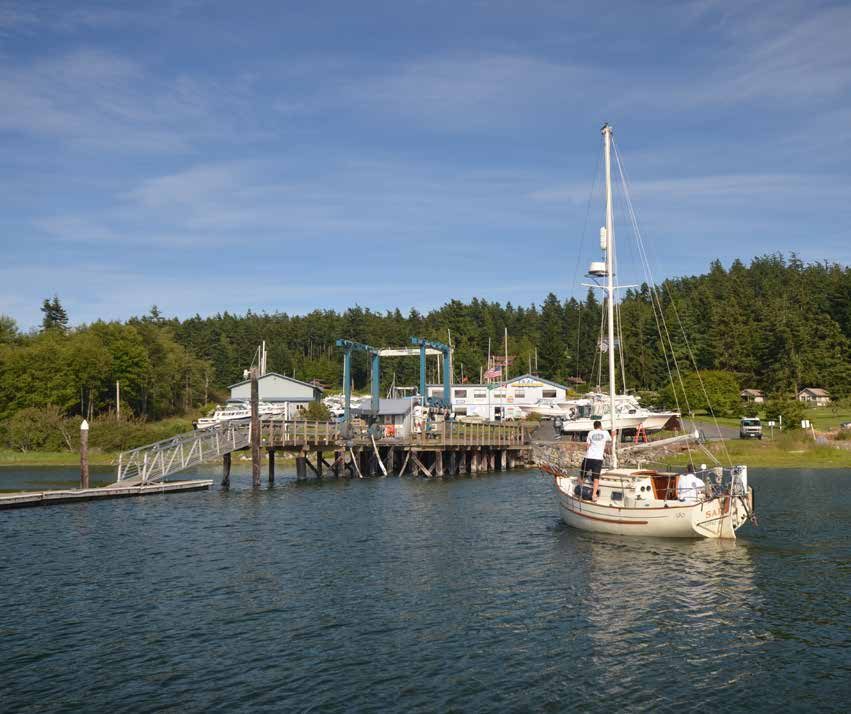
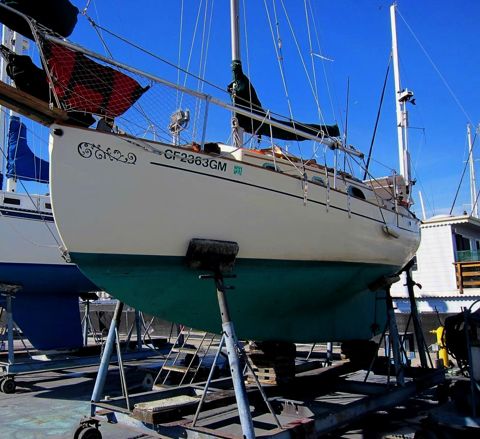
While many of the previous articles in Flicka Friends have been about launching and recovering a Flicka with a trailer, this issue includes information about using a travel-lift to get a Flicka to and from land. Without owning a trailer and a boat ramp, the only way to get your Flicka from the water is to use a travel-lift. There are a number of things to consider for hauling your Flicka.
The depth of the water should be the first concern. For saltwater sailors, the tide charts need to be consulted before making any plan.
In my case, the tide must be four feet for the marina to consider launching my Flicka. The tide level is actually checked before I book a flight across the country to go sailing.
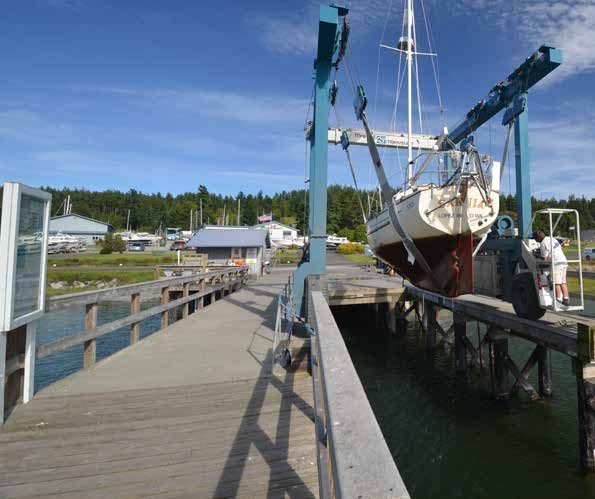
While there is a reservation for a launch time, this is always variable. The marina usually gives me thirty minutes notice before the Travel-lift shows up. The process is real simple. They position the Travel-lift around my Flicka, the slings are carefully positioned under the keel, they lift my sailboat, and drive it to the launch dock. Once at the dock, I step aboard my Flicka and they lower me and my sailboat into the water. They leave the slings tight while the bilge is checked for leaks or other problems. Once everything has been checked, the engine is started. The slings are loosened enough for the Flicka to be powered out of the dock.
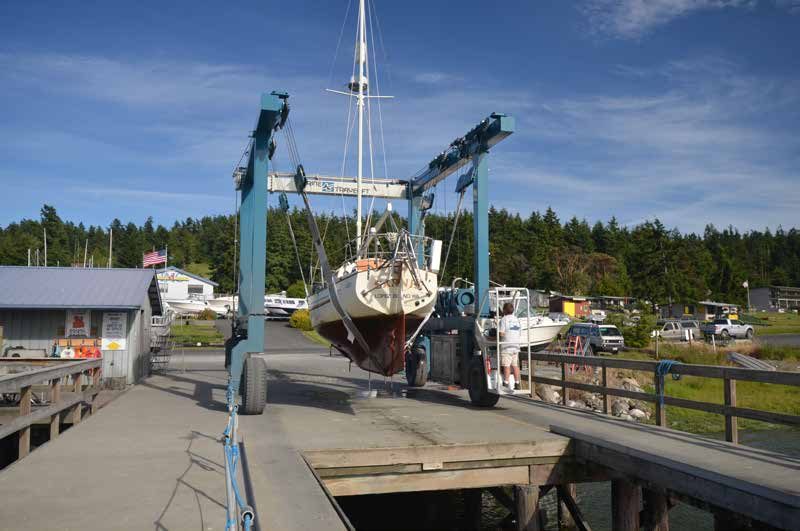
This is all real obvious stuff, but having only launched using trailers in the past, it was new to me. There are a few things to know to make the process fast and safe. The lift operator is running the show and you need to listen to the instructions given. There may be very little verbal communication during the lift, but you are expected to follow the directions. It is a good idea to have the wrenches for the packing gland out and ready. In the event they need adjustment, this task can be taken care of quickly. Depending on wind conditions, they may move your Flicka with lines rather than the engine. Controlling a Flicka along the dock in strong crosswinds is much easier with long lines than trying to use the motor. Since the first two lifts (a haul-out and a launch), I’ve left the marina and had them take care of the recovery. They do a good job and my Flicka is well protected. The lift operator commented once that they didn’t want problems any more than I did. That was reassuring.
Advertisement
Transcribed from Flicka Friends, Winter 2014 (page 22). Read it as originally printed in the PDF, or see everything else in this issue.
Boats in this story
Each links to the boat's page in the Flicka 20 registry.
Advertisement
Next in this issue
Flicka Factory Cradle Tom DavisonMore from the archive
Every surviving issue is in the Flicka Friends archive. Looking for a particular boat? Try the Flicka 20 registry.