Flicka Friends · Winter 2014 · Vol 16, #1
Flicka Factory Cradle
By Tom Davison · page 24 of the Winter 2014 issue
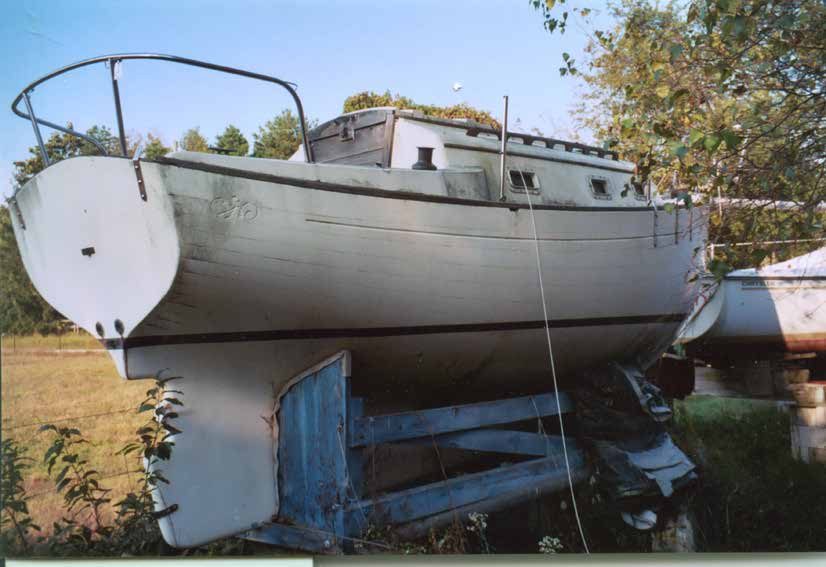
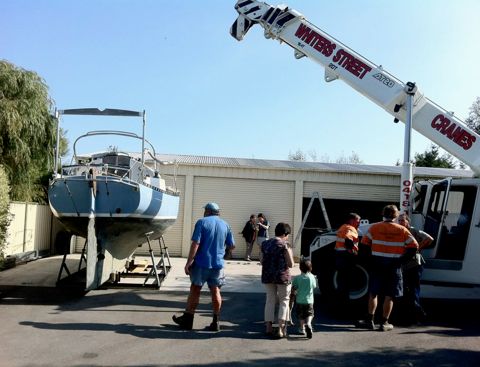
Flickas were shipped from the Pacific Seacraft factory in California using a wood cradle. The photo above shows one of these cradles in use.
There is a Flicka Friends article about the materials required to build one of the Pacific Seacraft cradles in the Summer 2006 issue of Flicka Friends. At that time, the cost of the wood and various nuts and bolts totaled $150- $200. This is the least expensive option for storing your Flicka on land. The most difficult part of building the cradle would be scribing the bow and keel shapes for the hull supports. This could be accomplished using techniques designed for installing interior walls in sailboats.
One other reason for investing the time and money for a boat cradle is for the Flicka owners that live in hurricane country. Getting your Flicka out of the water is the best way to protect your favorite little yacht. The cost is minimal and a flatbed trailer could be used to move your sailboat to higher ground.
Advertisement
While a travel lift would be the easiest way to load the Flicka, with a hurricane just over the horizon, you might be able to haul out if the cradle was secured to the trailer.
This simple cradle could be built for routine maintenance while sailing in other countries if boat stands were not available. Your factory or home-built cradle will need some maintenance over the years if you use it long term. I’m sure that a coast of paint and new carpeting would be required. After a few years, using the wood cradle for transport may be suspect.
You would need to inspect the wood cradle annually. Right after you launch for the season would be a good time. That would allow making repairs during the summer. Waiting until the haul-out could cost you, both in terms of frustration and boat yard costs.
The choice of flatbed trailers is an important decision as well. While you might not need anything fancy to move your sailboat across the boat yard, taking your Flicka down the road is another matter. Besides meeting legal requirements, the trailer must be adequate. While driving home five years ago, I passed a house where a Cape Dory 28 had been stored in their yard. It was not there and I wondered where they would be sailing. Over the next hill, I found out where. It looked like the trailer and tow vehicle were not suited for the job. While the trailer was rated for the weight of the sailboat, the overall length was short. The vehicle used to tow was also a short wheel base four-wheel drive. From the marks in the road, it appeared that the trailer began to sway and while doing so, one of the cradle supports broke. The Cape Dory ended up lying in the middle of the road. Getting the sailboat out of the road involved a very large crane, a large semi flatbed truck and more than two hours from start to finish. Hopefully, his insurance covered much of the accident and that they didn’t cancel his policy right after payment. Use an older wood cradle for road transport with considerable caution.
Transcribed from Flicka Friends, Winter 2014 (page 24). Read it as originally printed in the PDF, or see everything else in this issue.
Boats mentioned
Each links to the boat's page in the Flicka 20 registry.
Advertisement
Next in this issue
Shopping For A Cradle Flicka FriendsMore from the archive
Every surviving issue is in the Flicka Friends archive. Looking for a particular boat? Try the Flicka 20 registry.