Flicka Friends · Winter 2014 · Vol 16, #1
Cribbing and Boat Stands
By Tom Davison · page 4 of the Winter 2014 issue
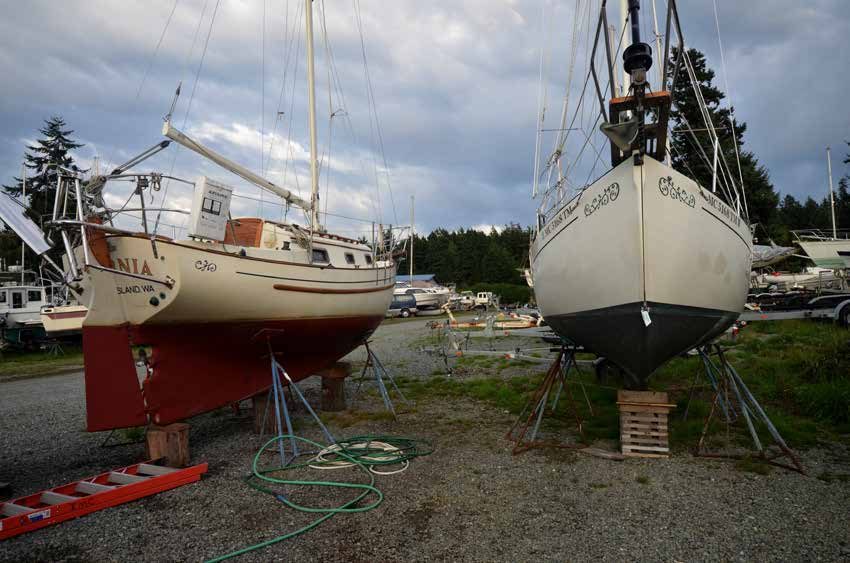
After the trip to the San Juan Islands in Washington State in October 2012 to buy my Flicka, I needed a place for storage. The previous owner used one of the two marinas in the bay and I decided to use them as well. Since they were the only one with a travel lift, there really was no decision to make and no other option either on the bay.
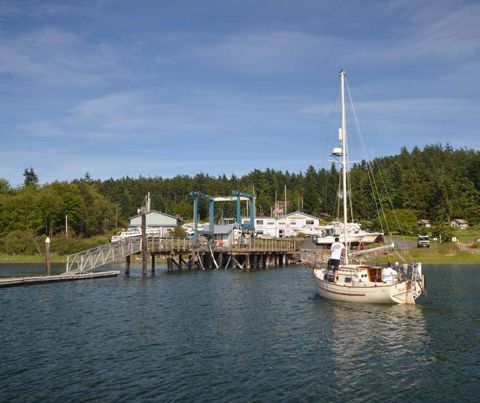
Getting my sailboat to the travel-lift basin was a challenge in itself with the thirty-knot+ gale winds astern. This wasn’t easy with no one on the dock to assist me. The rush was a falling tide, which required my arrival before the marina opened up for the day.
The first time my Flicka was hauled, I watched the entire process from beginning to end. The marina would be hauling and storing my Flicka and they did a great job. I was pleased. After three trips, they have lifted my Flicka for me five times. The first two times, I watched every minute.
Advertisement
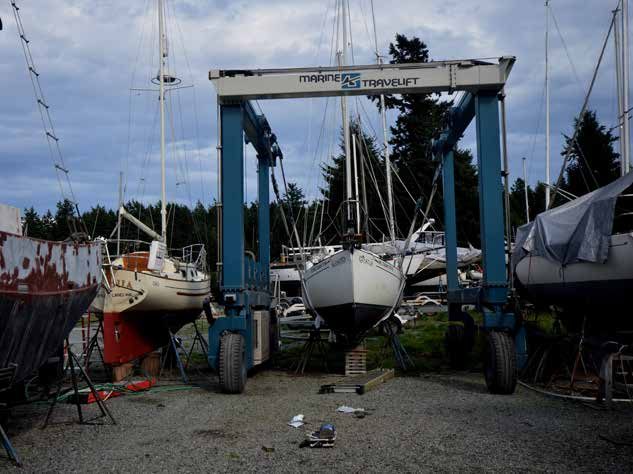
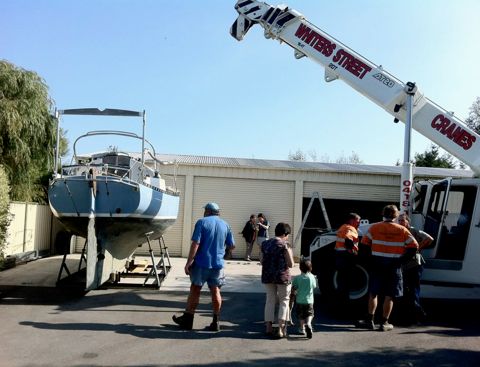
They used a Travel-lift to raise my Flicka from the water, and then drive it across the road, and up a slight hill into the marina yard. Along the way out of the water, they stop to pressure wash the hull.
The whole process takes roughly an hour from beginning to end for hauling out including power washing. Since launching skips cleaning the hull, it takes roughly thirty minutes to get my Flicka into the water.
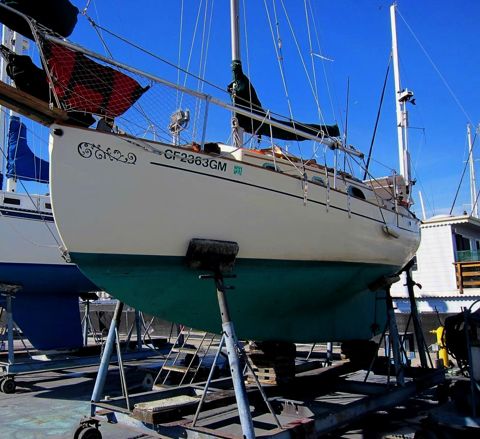
In the yard, my Flicka is driven into the area where it will be stored and lowered close to the ground. Wooden cribbing or several logs are positioned under the keel of the sailboat while is lowered. Next, four boat stands are positioned fore and aft to support the hull and keep it centered over the keel. Chains were used to connect each stand with the one on the opposite side of the boat. One stand is snugged up and the other is close until the chain is connected. A final pull against the chain and the pad is adjusted. This process is repeated for the bow stands. The travel-lift straps are loosened and removed and the lift drives away leaving my Flicka high and dry until I get back again.
As this particular issue of Flicka Friends developed, I began to research the use of boat stands and their history.
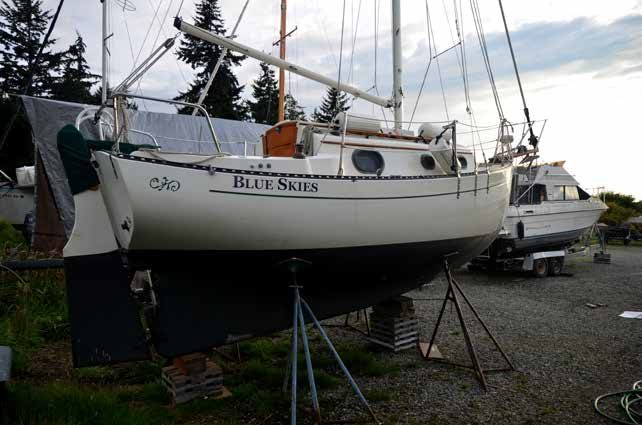
The marina where BLUE SKIES is stored in uses Brownell Boat Stands. The stands work perfectly and have for two winters so far. The marina provides the stands as part of my storage charge.
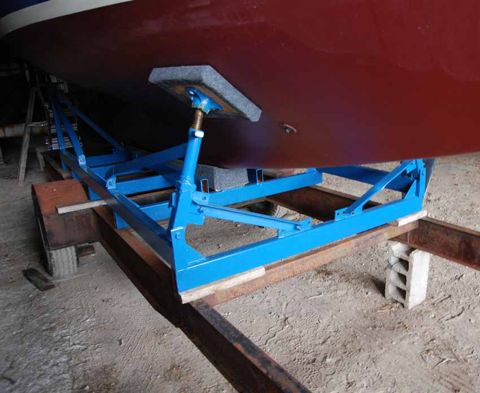
Brownell - The Brownell boat stand is the make used to support my Flicka. Invented in 1954, these tubular stands are stronger than angle section stands and are dipped in paint or galvanized to prevent rust.
Safety Chain - Part of the boat stand system was slots that secure a chain, which prevents the stands from moving. This chain connects to another boat stand on the opposite side of the sailboat. Brownell recommends 3/8-inch chain for their stands.
Cradle Bracket - While on Brownell’s website, I found another option for securing the boat stands. They sell cradle brackets that are clamped to the boat stand. The bracket also clamps around one inch outside diameter pipe, which can be used to create a solid connection between the boat stands.
These brackets allow connecting the boat stands fore and aft as well as port to starboard. The chains only connect port to starboard. These brackets create something like a cradle for your Flicka.
Setting the stands - Something that you should request is setting the hull correctly to allow proper draining. While I doubt that your Flicka would be set at an extreme angle, it would be best to have the hull set to allow the cockpit drains to work as intended.
Cost - The boat stands used to support my Flicka are Brownell and retail as West Marine for $160 USD. If I were to purchase them, the cost would be $640. This is enough that the purchase of a cradle would be considered instead.
Web Research - Digging around the web, other companies sell the stands for $30 less. Shipping would be the final factor for purchase. Paying truck freight costs for stands that weighs fifty pounds each could easily add $30. Picking the stand up at a local West Marine store if they ship for free might be the best option. If you live near another marine store and can get free shipping, that might be the least expensive of all.
One thing that I didn’t like about the Brownell boat stand is the flat plywood pad. In Rik Sandberg’s article “Building a Cradle For Your Flicka,” he shows a boat pad that allows the plywood to bend with the surface of the hull. The Brownell models appear to be plywood that is completely supported by metal. This does not allow the pad to conform to the hull shape.
Safety - Lifting a sailboat is serious business and you need to work with and for the lift operator during this process. If you are not sure of what will happen, ask a few questions before the process begins. The operator should be able to give you a quick explanation of what will occur.
If you are aboard while launching, you need to listen to the instructions of the operator carefully. It is likely that you will be asked to check the bilge for leaks once you are in the water. Once you determine the bilge is OK, the slings will be loosened enough to free the hull. Make certain you follow the directions of the lift operator until you are clear of the slings and the lifting area. From that point forward, you are the captain again.
Transcribed from Flicka Friends, Winter 2014 (page 4). Read it as originally printed in the PDF, or see everything else in this issue.
Boats in this story
Each links to the boat's page in the Flicka 20 registry.
Advertisement
Next in this issue
HEART of GOLD’s Cradle Tom DavisonMore from the archive
Every surviving issue is in the Flicka Friends archive. Looking for a particular boat? Try the Flicka 20 registry.